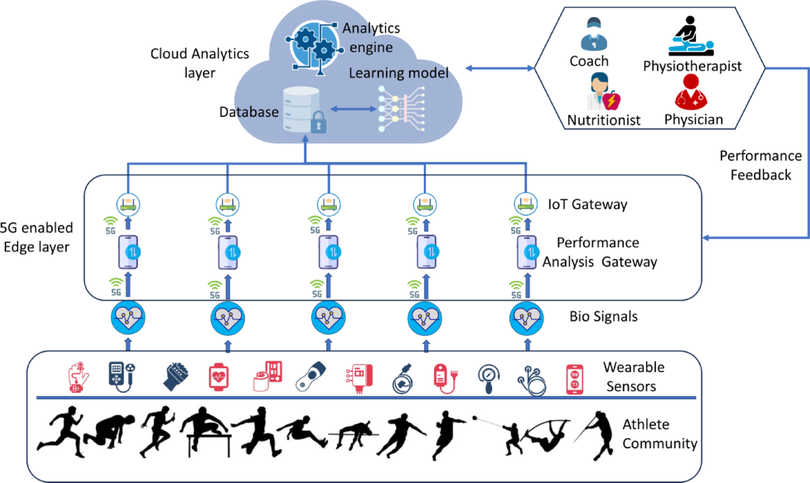

Digital platforms hosting live athletic events face distinct technical challenges that set them apart from traditional e-commerce and media publishing systems. Rather than serving static page layouts or pre-rendered video assets, these platforms must ingest, process, and distribute synchronized telemetry across thousands of active client sessions simultaneously.
Achieving sub-second latency while preserving system stability requires a departure from traditional request-response software patterns. Software engineering teams building high-concurrency systems must align cloud infrastructure, edge caching, real-time communication protocols, and client-side rendering strategies into a cohesive architecture capable of surviving extreme traffic bursts.
Low-Latency Data Streaming and State Synchronization Protocols
Legacy HTTP polling mechanisms are ill-suited for high-concurrency interactive platforms due to repetitive request headers and unpredictable network round-trip overhead. Modern event-driven architectures rely primarily on persistent WebSocket connections or HTTP/2 Server-Sent Events to push instantaneous metric changes directly to connected user clients. This model minimizes server CPU utilization while eliminating client-side polling delays during critical moments of live play.
Architecture teams must establish strict message prioritization protocols within real-time data pipelines to prevent queue congestion. For instance, when users interact with real-time interfaces to analyze live cricket or football odds and place a desi bet on sports, the underlying software infrastructure must handle bidirectional communication via WebSockets to prevent input lag or stale pricing displays. If network jitter causes telemetry packets to arrive out of order, client-side state managers must immediately discard outdated payload frames rather than rendering obsolete event metrics.
Edge caching layers further reduce pressure on primary relational database clusters during high-traffic moments. By deploying in-memory datastores such as Redis or KeyDB near cloud access points, platforms maintain lightweight, hot-data stores for active event metrics. Microservices can fulfill read queries in under five milliseconds without touching disk-bound storage backends.
Managing Concurrency Spikes During High-Profile Live Events
Live sporting events produce non-linear traffic profiles marked by severe, sudden read and write spikes. Key match events, such as a goal, red card, or boundary hit, frequently trigger hundreds of thousands of concurrent client interactions within a narrow five-second window. Provisioning static infrastructure capacity for peak traffic is economically inefficient, leading engineering teams to adopt container orchestration platforms like Kubernetes configured with aggressive horizontal auto-scaling rules.
Handling transactional integrity during these traffic surges demands asynchronous queue processing and distributed locking strategies. Utilizing message brokers like Apache Kafka isolates live metric ingest streams from core account ledger systems. This decoupled microservices architecture ensures that heavy read bursts querying match statistics do not block write operations linked to authentication checks or session validation.
Architectural Trade-Offs in Real-Time Protocol Selection
Selecting the optimal protocol stack depends on the balance between server-to-client telemetry broadcasts and client-to-server transaction volume. The following table highlights core technical characteristics across standard web communication models:
| Protocol Model | Primary Functional Focus | Latency Profile | Infrastructure Complexity |
|---|---|---|---|
| WebSockets | Full-duplex interactive sessions | Sub-50ms bidirectional | High (requires sticky sessions and socket state management) |
| Server-Sent Events | Unidirectional live metric feeds | Sub-100ms server-to-client | Medium (operates over standard HTTP/2 streams) |
| HTTP Long Polling | Legacy fallback environments | 500ms–2000ms variable | Low (uses standard REST endpoints) |
Implementing WebSockets delivers the lowest bidirectional latency for interactive UI modules, though it necessitates specialized edge proxies to manage millions of concurrent open sockets. Server-Sent Events, by contrast, integrate seamlessly with existing HTTP distribution networks, offering a simpler scaling path when client-to-server messaging is handled through separate API endpoints.
Front-End Performance Controls and Rendering Optimizations
Distributing high-frequency data streams to mobile web browsers presents steep rendering challenges. Uncontrolled DOM updates driven by rapid WebSocket messages can easily saturate browser main threads, resulting in frame drops and sluggish controls. To maintain UI responsiveness at 60 frames per second, front-end engineers employ frame-budgeting techniques using requestAnimationFrame loops alongside virtualized list rendering.
Moving complex computational tasks—such as live probability calculations or historical data parsing—off the browser main thread prevents interface freeze. Executing data transformation pipelines within dedicated Web Workers allows mobile devices operating on variable cellular networks to maintain smooth layout performance even during intense data bursts.
Operational Resiliency and Observability in Real-Time Systems
Maintaining uptime for interactive media platforms requires continuous operational focus on fault isolation, automated failover, and comprehensive observability. When dependent downstream services experience temporary degradation, circuit breaker patterns must automatically shift traffic to read-only replica stores rather than returning structural errors to client applications.
Executing structured load testing and chaos engineering simulations helps engineering teams identify bottleneck dependencies long before major sporting events begin. Combining real-time metric tracing with resilient edge design ensures digital sports platforms maintain low-latency responsiveness, data accuracy, and operational stability under heavy global demand.